
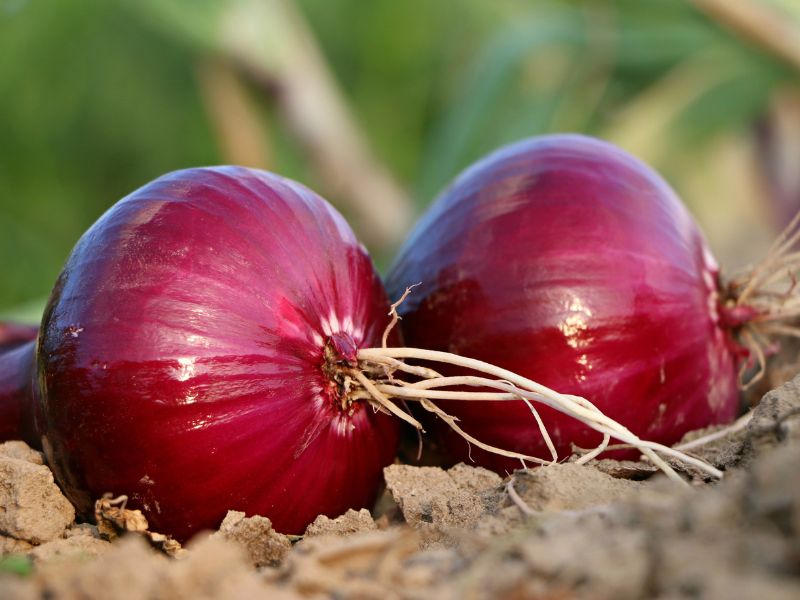
The onion export business represents a critical segment of the global agri-commodity trade. As one of the world’s largest onion producers, India plays a strategic role in supplying export-grade onions to international markets. With advanced post-harvest handling, improved storage infrastructure, and competitive pricing, Indian exporters—particularly from Nashik, Maharashtra—have established a strong presence in global onion supply chains.
This blog provides a technical, process-driven, and market-oriented analysis of the onion export business, designed for professional exporters, importers, and agri-trade stakeholders.
Global Significance of the Onion Export Business
Onions are classified as a high-volume, fast-turnover agricultural commodity with stable year-round demand. Their long shelf life and versatility make them a preferred export product.
Key global demand drivers:
- Core ingredient in commercial and household food preparation
- Essential raw material for food processing industries
- Rising consumption in Middle East, Asia, and Africa
- Population growth and urbanization driving demand
The onion export business benefits from predictable demand cycles and scalable trade volumes.
India’s Competitive Advantage in Onion Exports
India holds a strong comparative advantage due to a combination of agro-climatic suitability and cost-efficient production.
Structural strengths include:
- High annual onion production volumes
- Export hubs such as Nashik, Lasalgaon, Ahmednagar
- Multiple crop cycles ensuring continuous availability
- Proximity to major export ports (JNPT, Mumbai)
- Competitive labor and logistics costs
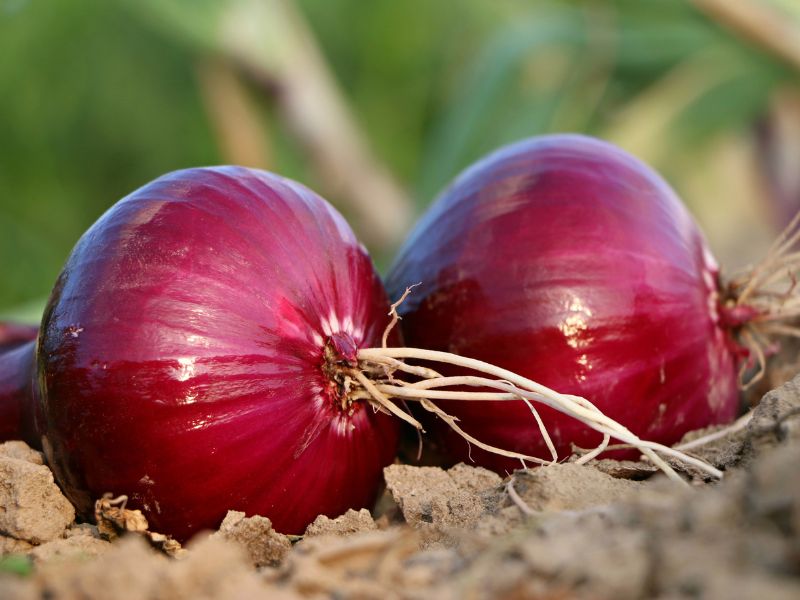
Nashik onions, in particular, are recognized for uniform bulb structure, deep red color, and extended shelf stability, making them suitable for long-haul exports.
Export-Oriented Onion Varieties
Market-specific variety selection is a critical success factor in the onion export business.
Primary export varieties:
- Red Onions
- High pungency and firm texture
- Dominant demand in UAE, Bangladesh, Sri Lanka
- Excellent storage performance
- White Onions
- Low moisture content
- Preferred for dehydration and processing
- Strong demand in Europe
- Yellow Onions
- Balanced flavor profile
- Widely used in Western food service sectors
Uniform grading and size calibration are mandatory for premium markets.
Quality Parameters and Compliance Standards
Quality assurance and regulatory compliance define exporter credibility in international trade.
Export-grade quality specifications:
- Mature, well-cured bulbs
- Free from:
- Sprouting
- Mechanical damage
- Fungal or bacterial infection
- Consistent bulb size and skin integrity
- Low moisture content for shelf life optimization
Mandatory export documentation:
- Import Export Code (IEC)
- APEDA registration
- Phytosanitary certificate
- Certificate of origin
- Pre-shipment inspection report
Adherence to these standards ensures smooth customs clearance and buyer confidence.
Post-Harvest Handling, Storage, and Packaging
Efficient post-harvest management is essential for minimizing losses and preserving export quality.
Storage best practices:
- Well-ventilated warehouses
- Controlled humidity levels
- Proper curing before storage
- Stack management to prevent pressure damage
Export packaging formats:
- 5 kg, 10 kg, and 25 kg mesh bags
- Jute bags for bulk shipments
- Customized packaging with:
- Buyer branding
- Country-specific labeling
- Traceability information
Optimized packaging improves product durability during maritime transit.
Export Logistics and Supply Chain Management
The onion export business relies heavily on efficient logistics and supply chain coordination.
Key logistics considerations:
- Selection of shipment mode (sea or land)
- Container stuffing optimization
- Temperature and ventilation control
- Transit time planning for freshness retention
Trade terms commonly used:
- FOB (Free on Board)
- CIF (Cost, Insurance, and Freight)
- CNF (Cost and Freight)
Professional exporters focus on minimizing transit losses and maintaining delivery timelines.
Pricing Mechanism and Profitability Analysis
Pricing in the onion export business is influenced by multiple internal and external variables.
Cost components:
- Farm-gate procurement cost
- Sorting, grading, and packaging expenses
- Inland transportation
- Port handling and freight charges
- Exchange rate volatility
Profit optimization strategies:
- Direct sourcing from farmers
- Long-term buyer contracts
- Volume-based export planning
- Market-specific pricing models
Strategic cost control ensures sustainable margins.
Challenges and Risk Management
Despite strong demand, the onion export business is subject to operational and regulatory risks.
Common challenges:
- Price volatility in domestic markets
- Government export restrictions
- Perishability risks
- Freight rate fluctuations
Risk mitigation approaches:
- Market diversification
- Inventory planning
- Policy monitoring
- Reliable logistics partnerships
Proactive risk management enhances business resilience.
Future Growth and Value-Added Opportunities
The onion export business is evolving beyond raw commodity trade.
Emerging opportunities:
- Dehydrated onions
- Onion flakes and powder
- Private labeling for international buyers
- Contract farming models
- Digital B2B trade platforms
Value addition significantly improves export profitability and brand positioning.
Conclusion
The onion export business is a strategically significant and economically viable segment of agri-exports. With strong production capabilities, technical expertise, and compliance-driven operations, Indian exporters can secure long-term positions in global markets.
Exporters based in Nashik, such as Advika Exim Venture, are uniquely positioned to supply premium, export-grade onions that meet international quality standards and buyer expectations.
A disciplined, technical, and market-oriented approach is the foundation of sustainable success in the global onion export business